Understanding the Telephone Flat Icon: The Enduring Symbol of Retro Phone Calls in Modern Design
In the rapidly evolving landscape of digital interface design, certain symbols achieve a status that transcends their original utility. They become universal languages, instantly recognizable across cultures and generations. Among these enduring icons is the telephone flat icon. While modern communication has shifted dramatically toward instant messaging, video conferencing, and social media platforms, the visual representation of a handset remains a cornerstone of user experience (UX) design. This persistence is not merely a matter of tradition; it is a testament to the power of clear, intuitive visual communication. When we examine the retro phone call aesthetic, we are not just looking at nostalgia; we are observing a highly functional design element that bridges the gap between analog heritage and digital innovation.
The Evolution from Skeuomorphism to Flat Design
To fully appreciate the significance of the telephone flat icon, one must understand its historical trajectory. In the early days of graphical user interfaces, designers relied heavily on skeuomorphism—a design principle where digital objects mimic their real-world counterparts in appearance and sometimes function. Early phone icons looked like three-dimensional plastic handsets, complete with shadows, gradients, and textures. While realistic, these designs often cluttered interfaces and slowed down load times due to their complexity.
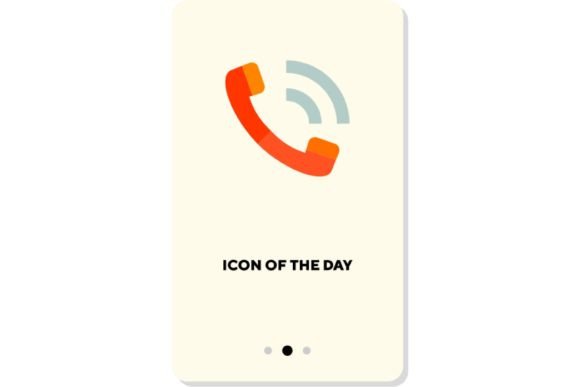
The shift toward flat design marked a pivotal moment in web and app development. By stripping away unnecessary decorative elements, designers created icons that were cleaner, faster to render, and easier to scale across various screen sizes. The telephone flat icon emerged from this transition as a streamlined silhouette. It retains the essential shape of the traditional handset—the curved earpiece and mouthpiece connected by a handle—but removes the depth and detail. This simplification does not diminish recognition; rather, it enhances it. The brain processes simple geometric shapes faster than complex images, allowing users to identify the "call" function instantaneously.
Why the Retro Aesthetic Persists
You might wonder why designers continue to use a symbol based on a device that few people physically use today. The answer lies in semiotics, the study of signs and symbols. The classic handset shape has become the definitive signifier for voice communication. Even though modern smartphones are rectangular slabs of glass, the icon remains a stylized representation of the action, not the device. This is where the concept of the retro phone call becomes relevant. It is not about replicating old technology but about leveraging a deeply ingrained cultural association. When a user sees this icon, they do not think of a 1980s landline; they think of "initiating a voice connection." This immediate cognitive link is invaluable in UX design, reducing the learning curve for new applications.
Practical Applications in Web and App Design
The versatility of the telephone flat icon makes it indispensable across a wide range of digital products. Its application extends far beyond the simple "dialer" app on a smartphone. Here are several key areas where this icon plays a critical role:
- Contact Pages: On corporate websites, the telephone icon is universally used to indicate customer support numbers. Placing this icon next to a phone number signals to the user that clicking or tapping will initiate a call, streamlining the path to assistance.
- Emergency Services: In health and safety apps, the retro phone call symbol is often used in red or high-contrast colors to denote emergency hotlines. Its simplicity ensures it is recognizable even in high-stress situations where cognitive load is high.
- VoIP and Communication Platforms: Applications like Zoom, Skype, and WhatsApp use variations of the handset icon to start or end audio calls. Despite the advanced technology behind these services, the foundational symbol remains unchanged, providing consistency across platforms.
- Call-to-Action (CTA) Buttons: For service-based businesses, such as plumbers, lawyers, or consultants, a prominent telephone icon serves as a primary CTA. It encourages immediate engagement by highlighting the availability of direct human interaction.
Each of these use cases relies on the icon’s ability to communicate function without text. In a globalized digital economy, where websites serve users from diverse linguistic backgrounds, visual universality is a significant advantage. The vector illustration symbol elements used in these icons ensure that they remain crisp and legible whether displayed on a massive desktop monitor or a small smartwatch face.
Design Considerations for Telecommunication Icons
Creating or selecting the right telephone flat icon requires attention to detail. While the concept seems simple, poor execution can lead to confusion or aesthetic dissonance. Designers must consider several factors to ensure the icon effectively serves its purpose.
Clarity and Simplicity
The primary rule of flat design is clarity. The icon should be easily distinguishable from other communication symbols, such as email envelopes or chat bubbles. The curves of the handset must be smooth, and the proportions balanced. Overly stylized versions that deviate too far from the standard shape may fail to register as a phone icon, defeating the purpose. The goal is to create a retro phone call isolated sign that is instantly identifiable even at small sizes.
Color Psychology and Context
Color plays a crucial role in how the icon is perceived. Green is traditionally associated with answering or initiating a call, while red signifies ending or rejecting one. However, in static informational contexts, such as a contact page, the icon often adopts the brand’s primary color. It is essential to ensure sufficient contrast between the icon and its background. A light gray icon on a white background, for example, may be difficult for users with visual impairments to see. Accessibility standards, such as WCAG, should guide these decisions to ensure inclusivity.
Consistency with Brand Identity
While the telephone icon is a standard symbol, its style should align with the overall design language of the platform. A minimalist tech startup might opt for a thin-line vector icon, while a playful consumer brand might choose a bolder, rounded version. The key is consistency. If the rest of the interface uses sharp, angular icons, a rounded, soft-edged phone icon will look out of place. Designers must treat the telecommunication equipment symbol as part of a cohesive visual system.
The Role of Vector Graphics in Modern Implementation
The technical format of the icon is just as important as its visual design. In contemporary web development, vector graphics, particularly SVG (Scalable Vector Graphics), are the preferred format for icons like the telephone flat icon. Unlike raster images (such as JPEGs or PNGs), vectors are defined by mathematical equations rather than pixels. This means they can be scaled to any size without losing quality.
For a retro phone call icon, this scalability is vital. The same file can be used for a tiny favicon, a medium-sized button in a mobile app, and a large graphic in a hero section of a website. This efficiency reduces the need for multiple file versions, simplifying asset management for developers and designers. Furthermore, SVG files are typically smaller in file size, contributing to faster page load times—a critical factor for SEO and user retention. By using vector illustration symbol elements for web design, businesses ensure that their visual assets are both high-quality and performance-friendly.
Bridging the Gap Between Nostalgia and Functionality
There is an interesting psychological component to the use of retro-inspired icons. For older demographics, the handset shape evokes a sense of familiarity and trust. It recalls a time when communication was straightforward and dedicated. For younger users, who may have never owned a landline, the shape is simply the accepted convention for "voice call." This dual appeal makes the telephone flat icon a powerful tool for inclusive design. It respects the mental models of long-time internet users while adhering to the established norms that new users have learned.
Moreover, the trend of "neo-retro" design has seen a resurgence in recent years. Designers are increasingly incorporating vintage aesthetics into modern interfaces to create warmth and personality. In this context, a slightly stylized retro phone call icon can add character to an otherwise sterile digital environment. It serves as a subtle nod to the history of communication, reminding users of the human connection that underpins all technological advancement.
Future-Proofing Communication Symbols
As technology continues to advance, one might ask if the telephone icon will eventually become obsolete. Will future generations recognize a handset shape if physical phones disappear entirely? While it is possible that the symbol will evolve, its current dominance suggests it will remain relevant for the foreseeable future. Language and symbols change slowly, and the handset has had decades to embed itself in our collective consciousness.
However, designers should remain adaptable. We are already seeing the emergence of new symbols for video calls, voice messages, and AI assistants. Yet, for standard voice communication, the telephone flat icon remains the gold standard. Its simplicity, recognizability, and versatility make it an irreplaceable element of the digital toolkit. Whether used in a corporate hotline concept or a personal messaging app, it continues to facilitate clear and effective communication.
In conclusion, the telephone flat icon is more than just a decorative element; it is a functional necessity in modern web design. By understanding its origins, applications, and design principles, creators can leverage this symbol to enhance user experience and accessibility. The retro phone call aesthetic serves as a bridge between past and present, offering a familiar and reliable cue in an ever-changing digital world. As we continue to innovate in the realm of telecommunication, the humble handset icon stands as a reminder that good design is timeless.